
South African Education System Fuels Youth Unemployment –
Department of Basic Education should act urgently to address school dropout
(Cape Town, 31 May, 2016) – “The Department of Basic Education needs to act urgently to address the crisis in education for over 60% of youth who drop out of school without any school leaving qualification and little prospect of finding meaningful employment”, Robyn Beere, Director, Inclusive Education South Africa, said at a roundtable discussion hosted by the Catholic Parliamentary Liaison Office (CPLO) in Cape Town today.
In 2015 youth unemployment was at a staggering 63.1%, a situation that has dire consequences for the social and economic future of South Africa. “Our youth are becoming increasingly vulnerable as the cycle of poverty into which many have been born is perpetuated. They are frustrated, restless and angry and many find a home in gangs or become involved in criminal activity,” said Ms Beere. She explained that the reasons for learners leaving school are complex and diverse: the impact of socio-economic factors; progression from one grade to the next without support and notably, being pushed out by schools to improve the school’s matric pass rate. It comes as no surprise then that this ‘disenfranchised’ group is frustrated and displays challenging behaviour and low motivation to attend school and participate in school activities.
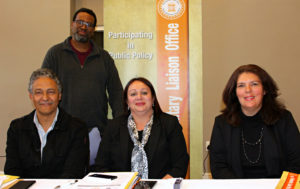
‘We need to look at the education system differently and at how it meets learner’s and society’s needs,’ argued panelist, Farrel Hunter, Country Director, DVV International. Ruschda O’Shea, also a panellist and high school principal, suggested that ‘the people taking the decisions should touch base with the people on the ground and consult with all stakeholders.’
Ms Beere elaborated on some of the solutions and stressed that teachers and district officials have to be trained and capacitated to address diversity. In addition, learners have to be empowered and involved in processes that affect their education. They need to be given a voice. They also have to be given options, other than an academic matric, such as the Technical, Vocational and Occupational streams provided by TVET colleges. “This requires a serious rethink by society and a review of the low value currently placed on technical, occupational and vocational work,” said Beere.
In conclusion, Ms Beere echoed the sentiment of the broader audience calling on the Department of Basic Education to shift its focus from matric results as the sole measure of success in schools. ‘The Second Chance Matric Strategy is too little too late,’ she said. ‘What we need is for the Department to address the inequality in South African Schools and implement and fund inclusive education to address learner diversity. If we are to build an inclusive economy and society, we have to start by building an education system that is inclusive and supports the development of all learners to reach their full potential and become independent, active citizens.’
Contact: Robyn Beere, Inclusive Education South Africa 021 762 6664