Working for IESA has afforded me so much as an individual I am forever grateful. I learn an enormous amount from each of the groups I work with and never fail to have at least one “AHA” moment in every training session. IESA’s mission is to challenge and change attitudes towards inclusion in education and often the change begins very palpably in the actual training session. I’d like to share one of those palpable experiences with you.
Whilst training a group of child and youth care workers in the Karoo last year, we were coming to the end of an exercise we do, examining our own experiences at school where we felt excluded. As is often the case in this particular exercise, participants share heart-wrenching stories of exclusion ranging from being excluded from sports teams because their parents could not foot the bill for transport to girls being excluded from the “in” group because they do not have “gladde hare.”
We’d almost wrapped up the session when one young woman very tentatively put her hand up and said “I’m not sure this is exclusion but I have never shared this story before and I’d like to do so now.” She went on to describe how, when she was in Matric (two years prior) despite not being an exceptionally good academic, she was a first class athlete winning first place in all her events. Not only was she the best sprinter at the school she also walked away with all the prizes at district level, breaking most of the existing records. She knew she would be awarded Sportswoman of the year, presented at the annual prize giving ceremony in October and also knew how proud her parents would be.
However in the July of her Matric year she fell pregnant. Although this was a big blow as it was an unplanned pregnancy, she, having discussed things with her mum, decided to have the baby. The school conversely were not as accommodating. She was made to feel like a total outcast by her teachers and she was forbidden to attend the end of year prize giving ceremony and her long awaited moment of glory. As she relayed the story, so the tears streamed down her face and by the end of it she could hardly speak. Fortunately the group were unbelievably supportive and rallied around her offering encouragement and sympathy.
At teatime I managed to chat with her on her own and she showed me photographs of her beautiful two year old. She went on to thank me for affording her the opportunity to tell her story and said she felt as though an enormous weight had been lifted from her shoulders. The DOE policy on pregnancy is to allow pregnant girls to stay on at school and return to school post-pregnancy. Nonetheless given this young girl’s experience clearly ‘allowing’ pregnant girls to stay at school and being supportive of them are two completely different things. Nobody wants an unplanned pregnancy especially if you’re still at school and ultimately we, as educators should be doing our best to educate our youth around issues of sexuality by providing information and skills to enable them to make informed choices. It is also our duty as educators to be as supportive, understanding and empathetic to young girls who do happen to fall pregnant whilst at school and most certainly to allow them to attend the year end prize giving ceremony.
Meet the Author:
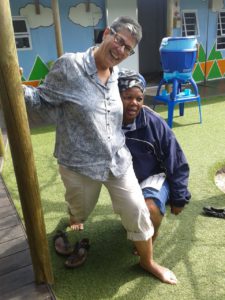
Kim Andreoli (left below) works for IESA as the Southern Cape ECD and Schools Trainer.